Book Appointment Now
Stroke Physiotherapy in Dubai: A Guide to Recovery and Rehabilitation
A stroke can change how someone moves through the world — their strength, balance, coordination, and ability to do the everyday things they once took for granted. Recovery looks different for everyone, but the right rehabilitation can make a real difference in regaining mobility and independence. If you or a loved one is looking for a stroke physiotherapist in Dubai, understanding what physiotherapy actually involves can help you make a more informed choice.
A good physiotherapist starts by getting to know the patient’s condition—not just the diagnosis, but their specific abilities, limitations, and goals — and builds a rehabilitation plan around that. From there, therapy becomes a process of steadily rebuilding movement, strength, balance, and the confidence to function independently again.
What Happens During a Stroke
A stroke happens when blood flow to part of the brain is cut off, or when a blood vessel in the brain ruptures. Because different regions of the brain control different functions, the effects can vary enormously from one person to the next.
Some of the more common physical effects include:
- Weakness or paralysis on one side of the body
- Trouble walking
- Poor balance and coordination
- Muscle stiffness
- Limited range of motion
- Difficulty using an arm or hand
- Postural problems
- Low endurance
- Struggling with daily tasks
No two strokes are identical, which is why rehabilitation needs to be tailored to the individual rather than following a one-size-fits-all template.
What Physiotherapy Actually Involves
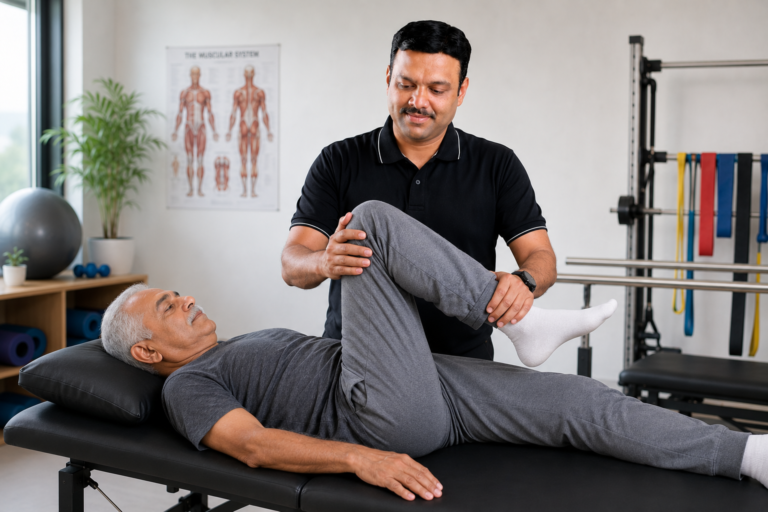
Stroke physiotherapy is a specialized branch of rehabilitation focused on the physical challenges that follow a stroke. It starts with an evaluation — movement, strength, balance, coordination, posture, gait, and overall functional mobility — and builds from there.
Depending on what the assessment reveals, a physiotherapist might use therapeutic exercise, balance training, gait training, stretching, and functional movement work.
But it’s not just about rebuilding muscle. Much of stroke rehab is about relearning movement patterns and figuring out how to do everyday tasks safely again — the kind of practical independence that makes daily life manageable.
How Physiotherapy Helps After a Stroke
Rebuilding strength. Muscle weakness is one of the most common aftereffects of stroke. Targeted exercises, chosen and adjusted as the patient progresses, help restore strength and control in the affected limbs.
Improving balance. Balance problems make standing and walking harder, and they raise the risk of falls. Work on posture, weight-shifting, and coordination helps patients move through their day with more confidence and less fear of falling.
Getting back on your feet. Some stroke survivors struggle with uneven steps, poor leg control, or trouble balancing while walking. Gait training and functional mobility work address this directly, and a physiotherapist may also recommend mobility aids where they’d help.
Managing stiffness. Spasticity and muscle stiffness are common after stroke and can interfere with movement, posture, and daily activities. Stretching, positioning, and targeted movement exercises can help keep this in check.
Restoring arm and hand function. Reaching, holding, lifting — these become difficult when a stroke affects arm or hand control. Repetitive, task-specific exercises are often used to rebuild functional use of the affected limb.
Regaining independence. Ultimately, much of this work is in service of one goal: helping someone do things for themselves again. That might mean practicing how to sit and stand, get in and out of bed, move from bed to chair, walk around the house, climb stairs, or simply reach for something on a shelf. Small as they sound, these are the abilities that shape daily life for both patients and the people caring for them.
Why Rehabilitation Timing Matters
Physiotherapy should begin as soon as it’s medically appropriate, guided by the recommendations of the patient’s healthcare team. Starting at the right stage opens up more opportunities to work on movement and function early.
That said, recovery doesn’t have a fixed endpoint. Many patients continue to benefit from physiotherapy well beyond the initial rehab period — sometimes for months, sometimes longer — depending on their condition and goals. Consistency matters here: regular sessions, paired with home exercises and support from family, tend to produce the best results over time.
What to Expect From an Assessment
Before treatment begins, a physiotherapist typically runs a thorough assessment covering:
- Muscle strength
- Joint movement
- Balance
- Walking ability
- Posture
- Coordination
- Muscle tone
- Functional mobility
- Ability to manage daily activities
- Use of mobility aids
This assessment becomes the foundation for an individualized treatment plan. Two people who’ve had a stroke might need entirely different approaches — which is exactly why personalization matters so much in this kind of rehab.
What to Look for in a Physiotherapist
If you’re choosing a physiotherapist for stroke rehabilitation, a few things are worth prioritizing:
- Real experience in neurological rehabilitation, not just general physiotherapy
- A genuinely individualized treatment plan
- Regular check-ins on progress
- A focus on functional movement, not just exercises in isolation
- Willingness to educate patients and caregivers, not just treat the patient
- Practical scheduling that works for your situation
- A proper clinical setting
It also helps to find someone who communicates well — with the patient, the family, and any other doctors or specialists involved in care.
Physiotherapy at Home
Getting to a clinic isn’t always realistic for someone with limited mobility. In those cases, home-based physiotherapy can be a practical alternative.
Therapy delivered at home lets the physiotherapist work directly on the movements and activities the patient actually needs to manage in their own environment — climbing their own stairs, navigating their own hallway, getting in and out of their own bed. It can also make it easier for family members to see, firsthand, how to support the patient safely.
The Role of Family
Recovery isn’t confined to physiotherapy sessions. Family and caregivers matter — encouraging safe movement, supporting the prescribed exercises, keeping a consistent routine, and following the therapist’s guidance all add up.
A good physiotherapist will take time to educate caregivers on safe techniques. And it’s worth saying plainly: caregivers shouldn’t push movements or introduce exercises that haven’t been cleared by a professional — that’s more likely to cause harm than help.
How Long Does It Take?
There’s no universal timeline. Recovery depends on the type and severity of the stroke, which part of the brain was affected, the person’s overall health, and how consistently they stick with rehabilitation.
Some people see noticeable progress fairly quickly. Others need a longer road. Rather than fixating on a specific timeframe, a good physiotherapist will help set realistic, functional goals and track progress against those.
Getting Started
Finding the right physiotherapist is often the first real step toward regaining mobility and independence after a stroke. Personalized therapy — built around strength, balance, coordination, walking, and functional movement — gives patients the best chance of progress that actually fits their situation.
If you or someone you love is recovering from a stroke, it’s worth consulting a qualified physiotherapist to figure out the right approach. Between professional guidance, consistent therapy, home exercises, and family support, there’s a lot that can move the needle on recovery — and having the right person guiding that process makes a real difference.
FAQ
When should physiotherapy start after a stroke?
Timing depends on the patient’s medical condition and should always be guided by their healthcare team. In many cases, rehabilitation can begin once the patient is medically stable, since starting early creates more opportunities to work on movement and function.
How many physiotherapy sessions will a stroke patient need?
There’s no fixed number — it depends on the severity of the stroke, the area of the brain affected, and how the patient responds to treatment. Some people improve within a few months, while others benefit from ongoing therapy for a year or more. A physiotherapist will typically set goals and adjust the plan based on progress rather than a set session count.
Can stroke physiotherapy be done at home instead of a clinic?
Yes, home-based physiotherapy is an option for patients who find it difficult to travel. It also lets therapy focus on the specific movements a patient needs in their own environment, like navigating stairs or getting in and out of their own bed.